DiatomBase
DiatomBase name details
Auliscus sculptus (W.Smith) Brightwell, 1860
699641 (urn:lsid:marinespecies.org:taxname:699641)
uncertain > unassessed
Species
Auliscus caelatus Bailey, 1854 · unaccepted (synonym)
- Variety Auliscus sculptus var. caelata (J.W. Bailey) Van Heurck, 1896 accepted as Auliscus caelatus f. caelatus J.W. Bailey, 1854 (uncertain > unassessed)
- Variety Auliscus sculptus var. constrictus (J.Rattray) T.V.Desikachary, 1888 accepted as Auliscus caelatus var. constricta J.Rattray, 1888 (uncertain > unassessed)
- Variety Auliscus sculptus var. major Desikachary, 1989 (uncertain > unassessed)
- Variety Auliscus sculptus var. nankoorensis (Desikachary & Ranjitha Devi in Desikachary) Desikachary, 1989 accepted as Auliscus caelatus var. nankoorensis Desikachary & Ranjitha Devi in Desikachary, 1986 (uncertain > unassessed)
- Variety Auliscus sculptus var. permagna Witt in Schmidt et al., 1888 (uncertain > unassessed)
- Variety Auliscus sculptus var. punctata ‘Mereschkowsky' Mills, 1933 (uncertain > unassessed)
- Variety Auliscus sculptus var. punctulata Mereschkowsky, 1902 (uncertain > unassessed)
- Variety Auliscus sculptus var. rhipis (A. Schmidt) Giffen, 1975 accepted as Auliscus rhipis var. rhipis Schmidt in Schmidt et al., 1875 (uncertain > unassessed)
- Variety Auliscus sculptus var. sculptus (W. Smith) Ralfs in Pritchard, 1861 accepted as Eupodiscus sculptus W.Smith, 1853 (uncertain > unassessed)
- Variety Auliscus sculptus var. strigillatus (A. Schmidt) Giffen, 1975 accepted as Auliscus caelatus var. strigillata Schmidt in Schmidt et al., 1875 (uncertain > unassessed)
- Variety Auliscus sculptus var. tripodiscus Brockmann, 1914 (uncertain > unassessed)
marine, fresh, terrestrial
(of Eupodiscus sculptus W.Smith, 1853) Smith, W. (1853). Synopsis of British Diatomaceae. John Van Voorst, London 1853., 1: 89 pp., pl. 1-31.
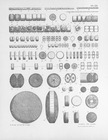
page(s): p. 25; pl. 4, fig. 42 [details]
page(s): p. 25; pl. 4, fig. 42 [details]
Distribution geographic region not obtained; recorded as being found in the Bay of Fundy
Distribution geographic region not obtained; recorded as being found in the Bay of Fundy [details]
Kociolek, J.P.; Blanco, S.; Coste, M.; Ector, L.; Liu, Y.; Karthick, B.; Kulikovskiy, M.; Lundholm, N.; Ludwig, T.; Potapova, M.; Rimet, F.; Sabbe, K.; Sala, S.; Sar, E.; Taylor, J.; Van de Vijver, B.; Wetzel, C.E.; Williams, D.M.; Witkowski, A.; Witkowski, J. (2021). DiatomBase. Auliscus sculptus (W.Smith) Brightwell, 1860. Accessed at: https://www.diatombase.org/aphia.php?p=taxdetails&id=699641 on 2025-07-03
Date
action
by
2018-01-31 09:33:29Z
changed
db_admin
2018-02-01 09:09:54Z
changed
db_admin
original description
(of Eupodiscus sculptus W.Smith, 1853) Smith, W. (1853). Synopsis of British Diatomaceae. John Van Voorst, London 1853., 1: 89 pp., pl. 1-31.
page(s): p. 25; pl. 4, fig. 42 [details]
context source (Schelde) Maris, T., O. Beauchard, S. Van Damme, E. Van den Bergh, S. Wijnhoven & P. Meire. (2013). Referentiematrices en Ecotoopoppervlaktes Annex bij de Evaluatiemethodiek Schelde-estuarium Studie naar “Ecotoopoppervlaktes en intactness index”. [Reference matrices and Ecotope areas Annex to the Evaluation methodology Scheldt estuary Study on “Ecotope areas and intactness index”. <em>Monitor Taskforce Publication Series, 2013-01. NIOZ: Yerseke.</em> 35 pp. (look up in IMIS) [details]
additional source Hartley, B., Ross, R. & Williams, D.M. (1986). A check-list of the freshwater, brackish and marine diatoms of the British Isles and adjoining coastal waters. <em>Journal of the Marine Biological Association of the United Kingdom.</em> 66(3): 531-610. [details] Available for editors [request]
additional source Thomas, M. L. H. (1983). Marine and coastal systems of the Quoddy Region, New Brunswick. <em>Canadian Special Publication of Fisheries and Aquatic Sciences.</em> 64:1-306. [details] Available for editors [request]
additional source Hällfors, G. (2004). Checklist of Baltic Sea Phytoplankton Species (including some heterotrophic protistan groups). <em>Baltic Sea Environment Proceedings.</em> No. 95: 210 pp., available online at http://helcom.fi/Lists/Publications/BSEP95.pdf [details] Available for editors [request]
additional source Fourtanier, E. & Kociolek, J. P. (compilers). (2011). Catalogue of Diatom Names. California Academy of Sciences, On-line Version. Updated 2011-09-19., available online at http://researcharchive.calacademy.org/research/diatoms/names/index.asp [details]
additional source Krayesky, D. M.; Meave, D. C.; Zamudio, E.; Norris, E.; Fredericq, S.; Tunnell, J. (2009). Diatoms (Bacillariophyta) of the Gulf of Mexico. <em>Gulf of Mexico origin, waters, and biota.</em> 1: 155-186. [details] Available for editors [request]
additional source Liu, J.Y. [Ruiyu] (ed.). (2008). Checklist of marine biota of China seas. <em>China Science Press.</em> 1267 pp. (look up in IMIS) [details] Available for editors [request]
additional source Harper, M.A.; Cassie Cooper, V.; Chang, F.H.; Nelson, W.A.; Broady, P.A. (2012). Phylum Ochrophyta: brown and golden-brown algae, diatoms, silicoflagellates, and kin, in: Gordon, D.P. (Ed.) (2012). New Zealand inventory of biodiversity: 3. Kingdoms Bacteria, Protozoa, Chromista, Plantae, Fungi. pp. 114-163. [details]
new combination reference Brightwell, T. (1860). On some of the rarer or undescribed species of Diatomaceae. Part II. Quarterly Journal of Microscopical Science, London, 8(31): 93-96, 139, pl. V, VI.
page(s): p. 139 [details]
page(s): p. 25; pl. 4, fig. 42 [details]
context source (Schelde) Maris, T., O. Beauchard, S. Van Damme, E. Van den Bergh, S. Wijnhoven & P. Meire. (2013). Referentiematrices en Ecotoopoppervlaktes Annex bij de Evaluatiemethodiek Schelde-estuarium Studie naar “Ecotoopoppervlaktes en intactness index”. [Reference matrices and Ecotope areas Annex to the Evaluation methodology Scheldt estuary Study on “Ecotope areas and intactness index”. <em>Monitor Taskforce Publication Series, 2013-01. NIOZ: Yerseke.</em> 35 pp. (look up in IMIS) [details]
additional source Hartley, B., Ross, R. & Williams, D.M. (1986). A check-list of the freshwater, brackish and marine diatoms of the British Isles and adjoining coastal waters. <em>Journal of the Marine Biological Association of the United Kingdom.</em> 66(3): 531-610. [details] Available for editors
[request]additional source Thomas, M. L. H. (1983). Marine and coastal systems of the Quoddy Region, New Brunswick. <em>Canadian Special Publication of Fisheries and Aquatic Sciences.</em> 64:1-306. [details] Available for editors
[request]additional source Hällfors, G. (2004). Checklist of Baltic Sea Phytoplankton Species (including some heterotrophic protistan groups). <em>Baltic Sea Environment Proceedings.</em> No. 95: 210 pp., available online at http://helcom.fi/Lists/Publications/BSEP95.pdf [details] Available for editors
[request]additional source Fourtanier, E. & Kociolek, J. P. (compilers). (2011). Catalogue of Diatom Names. California Academy of Sciences, On-line Version. Updated 2011-09-19., available online at http://researcharchive.calacademy.org/research/diatoms/names/index.asp [details]
additional source Krayesky, D. M.; Meave, D. C.; Zamudio, E.; Norris, E.; Fredericq, S.; Tunnell, J. (2009). Diatoms (Bacillariophyta) of the Gulf of Mexico. <em>Gulf of Mexico origin, waters, and biota.</em> 1: 155-186. [details] Available for editors
[request]additional source Liu, J.Y. [Ruiyu] (ed.). (2008). Checklist of marine biota of China seas. <em>China Science Press.</em> 1267 pp. (look up in IMIS) [details] Available for editors
[request]additional source Harper, M.A.; Cassie Cooper, V.; Chang, F.H.; Nelson, W.A.; Broady, P.A. (2012). Phylum Ochrophyta: brown and golden-brown algae, diatoms, silicoflagellates, and kin, in: Gordon, D.P. (Ed.) (2012). New Zealand inventory of biodiversity: 3. Kingdoms Bacteria, Protozoa, Chromista, Plantae, Fungi. pp. 114-163. [details]
new combination reference Brightwell, T. (1860). On some of the rarer or undescribed species of Diatomaceae. Part II. Quarterly Journal of Microscopical Science, London, 8(31): 93-96, 139, pl. V, VI.
page(s): p. 139 [details]
 Present Inaccurate Introduced: alien Containing type locality
Unreviewed
Diet phytosynthetic [details]Distribution geographic region not obtained; recorded as being found in the Bay of Fundy [details]
Habitat pelagic or attached to various marine life [details]
Importance most abundant phylum of algae [details]
Morphology yellow brown in color, not green [details]
Predators marine microorganisms and animal larvae [details]
Reproduction general for group: both sexual and asexual [details]
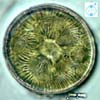
PlanktonNet Image
To Biodiversity Heritage Library (38 publications) (from synonym Auliscus caelatus Bailey, 1854)
To Biodiversity Heritage Library (83 publications)
To Catalogue of Diatom Names (CAS)
To NHMUK collection (Auliscus caelatus Bailey; NHMUK:ecatalogue:4740619) (from synonym Auliscus caelatus Bailey, 1854)
To PESI
To Biodiversity Heritage Library (38 publications) (from synonym Auliscus caelatus Bailey, 1854)
To Biodiversity Heritage Library (83 publications)
To Catalogue of Diatom Names (CAS)
To NHMUK collection (Auliscus caelatus Bailey; NHMUK:ecatalogue:4740619) (from synonym Auliscus caelatus Bailey, 1854)
To PESI
Unreviewed