DiatomBase
WoRMS name details
Striatella unipunctata (Lyngbye) C.Agardh, 1832
149177 (urn:lsid:marinespecies.org:taxname:149177)
uncertain > unassessed
Species
marine, fresh, terrestrial
recent only
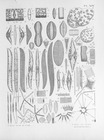
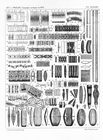
(of Fragilaria unipunctata Lyngbye, 1819) Lyngbye, H.C. (1819). Tentamen Hydrophytologiae Danicae Continens omnia Hydrophyta Cryptogama Daniae, Holsatiae, Faeroae, Islandiae, Groenlandiae hucusque cognita, Systematice Disposita, Descripta et iconibus illustrata, Adjectis Simul Speciebus Norvegicis. Hafniae., 248 pp., 70 pls., available online at https://www.biodiversitylibrary.org/page/5220228
page(s): p. 183; pl. 62, fig. G [details]
page(s): p. 183; pl. 62, fig. G [details]
Distribution Temperate species, common in littoral zone, occasionally in the plankton.
Distribution Temperate species, common in littoral zone, occasionally in the plankton. [details]
Kociolek, J.P.; Blanco, S.; Coste, M.; Ector, L.; Liu, Y.; Karthick, B.; Kulikovskiy, M.; Lundholm, N.; Ludwig, T.; Potapova, M.; Rimet, F.; Sabbe, K.; Sala, S.; Sar, E.; Taylor, J.; Van de Vijver, B.; Wetzel, C.E.; Williams, D.M.; Witkowski, A.; Witkowski, J. (2025). DiatomBase. Striatella unipunctata (Lyngbye) C.Agardh, 1832. Accessed through: World Register of Marine Species at: https://www.marinespecies.org/aphia.php?p=taxdetails&id=149177 on 2025-07-17
Date
action
by
2005-03-30 08:52:46Z
created
db_admin
2018-01-31 09:33:29Z
changed
db_admin
2018-02-01 09:09:54Z
changed
db_admin
 The webpage text is licensed under a Creative Commons
Attribution 4.0 License
The webpage text is licensed under a Creative Commons
Attribution 4.0 License
Nomenclature
original description
(of Fragilaria unipunctata Lyngbye, 1819) Lyngbye, H.C. (1819). Tentamen Hydrophytologiae Danicae Continens omnia Hydrophyta Cryptogama Daniae, Holsatiae, Faeroae, Islandiae, Groenlandiae hucusque cognita, Systematice Disposita, Descripta et iconibus illustrata, Adjectis Simul Speciebus Norvegicis. Hafniae., 248 pp., 70 pls., available online at https://www.biodiversitylibrary.org/page/5220228
page(s): p. 183; pl. 62, fig. G [details]
basis of record M'harzi, A. (1999). Phytoplankton community structuring in some areas of the North Sea. PhD Thesis. Vrije Universiteit Brussel: Brussel, Belgium. 221 pp. (look up in IMIS) [details]
new combination reference Agardh, C.A. (1832). Conspectus Criticus Diatomacearum. Part 4. <em>Lundae. Litteris Berlingianis.</em> pp. 48-66.
page(s): p. 61 [details]
page(s): p. 183; pl. 62, fig. G [details]
basis of record M'harzi, A. (1999). Phytoplankton community structuring in some areas of the North Sea. PhD Thesis. Vrije Universiteit Brussel: Brussel, Belgium. 221 pp. (look up in IMIS) [details]
new combination reference Agardh, C.A. (1832). Conspectus Criticus Diatomacearum. Part 4. <em>Lundae. Litteris Berlingianis.</em> pp. 48-66.
page(s): p. 61 [details]
Other
context source (HKRMS)
Huang ZG. & Lin S. (1993). Biofouling of Deep Bay buoys. In: Morton B, editor. Proceedings of the first internationl conference on the marine biology of Hong Kong and the south China Sea. The marine biology of the South China Sea. Hong Kong University Press, Hong Kong.1: pp 153-165. [details]
additional source Tomas, C.R. (Ed.). (1997). Identifying marine phytoplankton. Academic Press: San Diego, CA [etc.] (USA). ISBN 0-12-693018-X. XV, 858 pp., available online at http://www.sciencedirect.com/science/book/9780126930184 [details]
additional source Horner, R. A. (2002). A taxonomic guide to some common marine phytoplankton. <em>Biopress Ltd. Bristol.</em> 1-195. [details]
additional source Linkletter, L. E. (1977). A checklist of marine fauna and flora of the Bay of Fundy. <em>Huntsman Marine Laboratory, St. Andrews, N.B.</em> 68: p. [details]
additional source Martin, J. L.; LeGresley, M. M. ; Strain, P. M. (2001). Phytoplankton monitoring in the Western Isles region of the Bay of Fundy during 1997-98. <em>Canadian Technical Report of Fisheries and Aquatic Sciences 2349.</em> 4: 1-85. [details]
additional source Thomas, M. L. H. (1983). Marine and coastal systems of the Quoddy Region, New Brunswick. <em>Canadian Special Publication of Fisheries and Aquatic Sciences.</em> 64:1-306. [details] Available for editors [request]
additional source Fourtanier, E. & Kociolek, J. P. (compilers). (2011). Catalogue of Diatom Names. California Academy of Sciences, On-line Version. Updated 2011-09-19., available online at http://researcharchive.calacademy.org/research/diatoms/names/index.asp [details]
additional source Krayesky, D. M.; Meave, D. C.; Zamudio, E.; Norris, E.; Fredericq, S.; Tunnell, J. (2009). Diatoms (Bacillariophyta) of the Gulf of Mexico. <em>Gulf of Mexico origin, waters, and biota.</em> 1: 155-186. [details] Available for editors [request]
additional source Liu, J.Y. [Ruiyu] (ed.). (2008). Checklist of marine biota of China seas. <em>China Science Press.</em> 1267 pp. (look up in IMIS) [details] Available for editors [request]
additional source Lakkis, S. (2011). Le phytoplancton marin du Liban (Méditerranée orientale): biologie, biodiversité, biogéographie. Aracne: Roma. ISBN 978-88-548-4243-4. 293 pp. (look up in IMIS) [details]
additional source Harper, M.A.; Cassie Cooper, V.; Chang, F.H.; Nelson, W.A.; Broady, P.A. (2012). Phylum Ochrophyta: brown and golden-brown algae, diatoms, silicoflagellates, and kin, in: Gordon, D.P. (Ed.) (2012). New Zealand inventory of biodiversity: 3. Kingdoms Bacteria, Protozoa, Chromista, Plantae, Fungi. pp. 114-163. [details]
additional source Integrated Taxonomic Information System (ITIS). , available online at http://www.itis.gov [details]
additional source Tomas, C.R. (Ed.). (1997). Identifying marine phytoplankton. Academic Press: San Diego, CA [etc.] (USA). ISBN 0-12-693018-X. XV, 858 pp., available online at http://www.sciencedirect.com/science/book/9780126930184 [details]
additional source Horner, R. A. (2002). A taxonomic guide to some common marine phytoplankton. <em>Biopress Ltd. Bristol.</em> 1-195. [details]
additional source Linkletter, L. E. (1977). A checklist of marine fauna and flora of the Bay of Fundy. <em>Huntsman Marine Laboratory, St. Andrews, N.B.</em> 68: p. [details]
additional source Martin, J. L.; LeGresley, M. M. ; Strain, P. M. (2001). Phytoplankton monitoring in the Western Isles region of the Bay of Fundy during 1997-98. <em>Canadian Technical Report of Fisheries and Aquatic Sciences 2349.</em> 4: 1-85. [details]
additional source Thomas, M. L. H. (1983). Marine and coastal systems of the Quoddy Region, New Brunswick. <em>Canadian Special Publication of Fisheries and Aquatic Sciences.</em> 64:1-306. [details] Available for editors
[request]additional source Fourtanier, E. & Kociolek, J. P. (compilers). (2011). Catalogue of Diatom Names. California Academy of Sciences, On-line Version. Updated 2011-09-19., available online at http://researcharchive.calacademy.org/research/diatoms/names/index.asp [details]
additional source Krayesky, D. M.; Meave, D. C.; Zamudio, E.; Norris, E.; Fredericq, S.; Tunnell, J. (2009). Diatoms (Bacillariophyta) of the Gulf of Mexico. <em>Gulf of Mexico origin, waters, and biota.</em> 1: 155-186. [details] Available for editors
[request]additional source Liu, J.Y. [Ruiyu] (ed.). (2008). Checklist of marine biota of China seas. <em>China Science Press.</em> 1267 pp. (look up in IMIS) [details] Available for editors
[request]additional source Lakkis, S. (2011). Le phytoplancton marin du Liban (Méditerranée orientale): biologie, biodiversité, biogéographie. Aracne: Roma. ISBN 978-88-548-4243-4. 293 pp. (look up in IMIS) [details]
additional source Harper, M.A.; Cassie Cooper, V.; Chang, F.H.; Nelson, W.A.; Broady, P.A. (2012). Phylum Ochrophyta: brown and golden-brown algae, diatoms, silicoflagellates, and kin, in: Gordon, D.P. (Ed.) (2012). New Zealand inventory of biodiversity: 3. Kingdoms Bacteria, Protozoa, Chromista, Plantae, Fungi. pp. 114-163. [details]
additional source Integrated Taxonomic Information System (ITIS). , available online at http://www.itis.gov [details]
 Present Present in aphia/obis/gbif/idigbio Inaccurate Introduced: alien Containing type locality
Unreviewed
Diet phytosynthetic [details]Distribution Temperate species, common in littoral zone, occasionally in the plankton. [details]
Habitat pelagic or attached to various marine life [details]
Importance most abundant phylum of algae [details]
Morphology yellow brown in color, not green [details]
Predators marine microorganisms and animal larvae [details]
Reproduction general for group: both sexual and asexual [details]

To Barcode of Life
To Biodiversity Heritage Library (117 publications)
To Catalogue of Diatom Names (CAS)
To Dyntaxa
To European Nucleotide Archive, ENA (Striatella unipunctata)
To GenBank (37580 nucleotides; 13513 proteins)
To PESI
To Yale Peabody Museum of Natural History (YPM IZ 076271)
To ITIS
To Biodiversity Heritage Library (117 publications)
To Catalogue of Diatom Names (CAS)
To Dyntaxa
To European Nucleotide Archive, ENA (Striatella unipunctata)
To GenBank (37580 nucleotides; 13513 proteins)
To PESI
To Yale Peabody Museum of Natural History (YPM IZ 076271)
To ITIS
Unreviewed
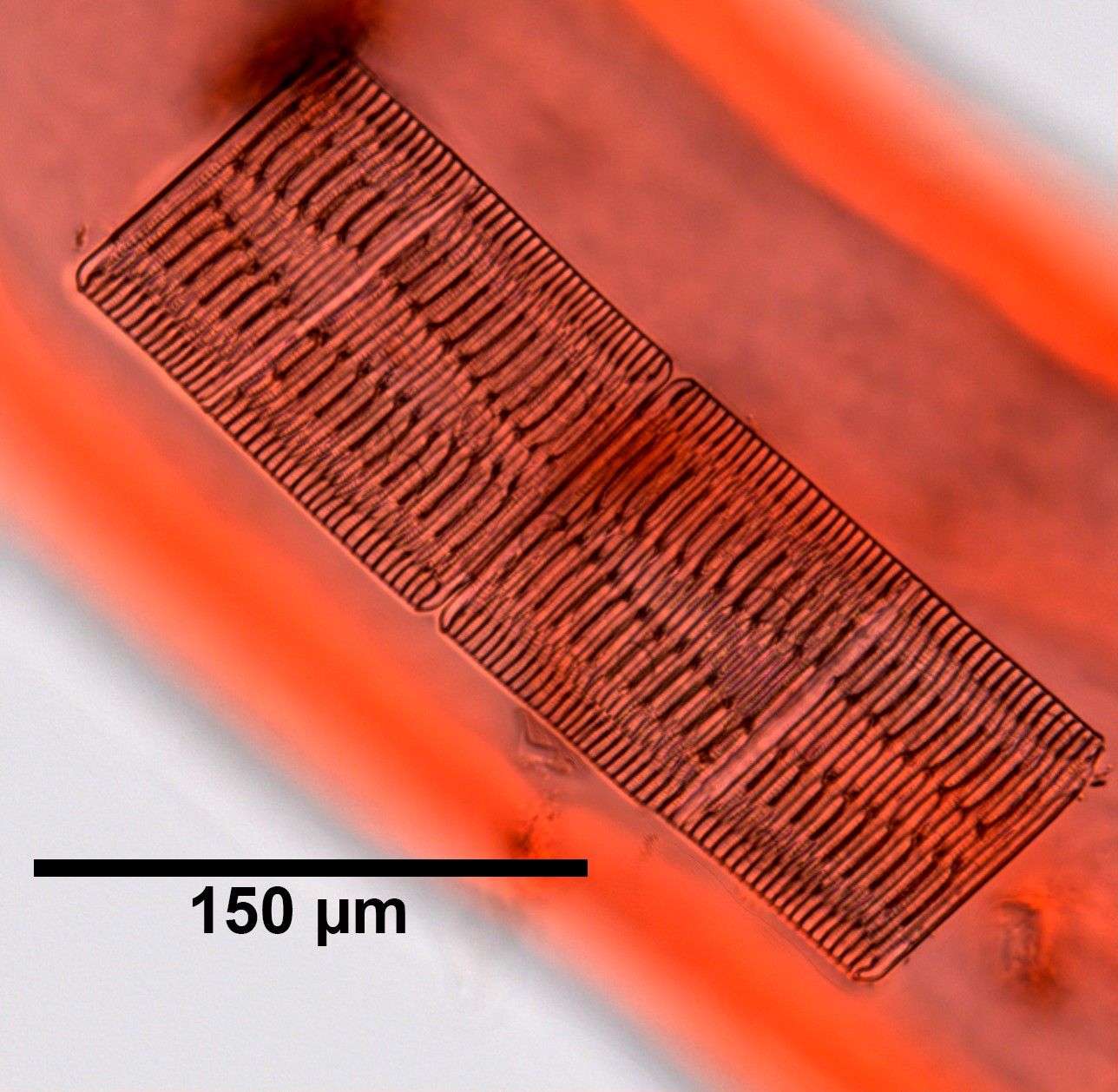
Hosted externally